
How to Choose Running Shoes for Your Foot Type
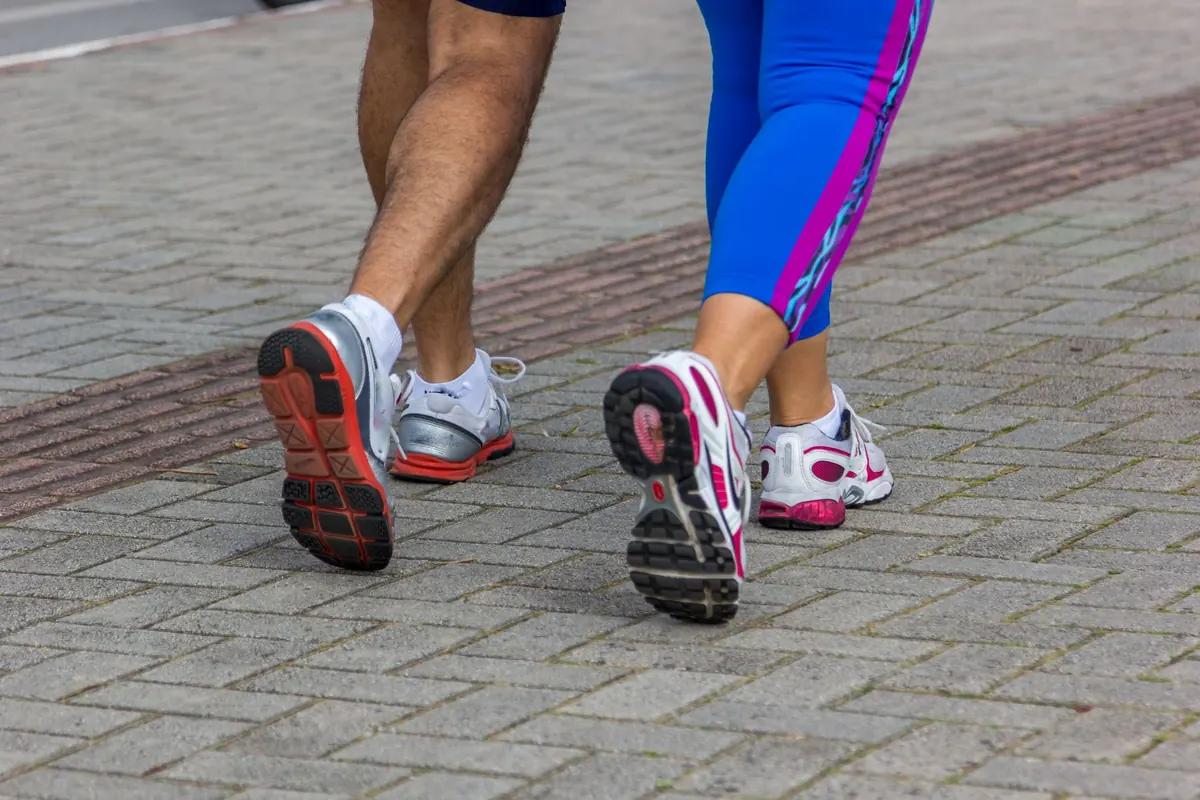
Your running buddy swears by a shoe that leaves you with aching arches by mile three. That is not proof either of you is doing something wrong. Running shoes are built around assumptions — about arch height, about how your ankle rolls when you land, about the ground under your feet. Borrow someone else's assumptions and you will spend the season working around a shoe instead of running in it. Match the shoe to your own feet, and the miles get quieter and kinder.
Start With Your Foot's Shape
Stand barefoot on a hard floor and look at the inside edge of your foot. If a finger slides under the arch with room to spare, you have a high arch. If the floor touches nearly the whole length of your foot, your arch is low or flat. Most people land somewhere in between.
A quicker check: wet the soles of your feet and step onto dark paper or a paper bag. The print tells the story.
- High arch: a narrow band connecting heel and ball, with little print in the middle. These feet tend to be rigid and spread impact over a small area, so cushioning matters more than extra support.
- Neutral arch: a moderate curve of print with a clear band along the outside edge. You have the widest range of options and can usually run happily in neutral shoes.
- Low or flat arch: a broad print, almost a full footprint. These feet often roll inward as you land, so a shoe with some stability — a firmer medial post or a denser, wider midsole — tends to feel steadier.
Arch height is a starting point, not a diagnosis. Two runners with identical wet-test prints can need very different shoes.
Watch How Your Ankle Rolls
Pronation is the natural inward roll of your foot after it lands. Everyone does it. Trouble starts when it happens too much or too little.
Reading the clues
- Overpronation: the ankle collapses inward, the inner edge of the outsole wears faster, and a well-used pair leans inward when you set it on a table. Sore arches or inner-knee aches are common companions. Stability or mild motion-control shoes usually help.
- Neutral: the ankle rolls in slightly and comes back. Wear shows on the outer heel and the center of the forefoot. Neutral shoes are fine.
- Underpronation, or supination: the foot stays on the outer edge and pushes off from the small toes. Wear concentrates on the outer heel and outer forefoot. Cushioned neutral shoes, rather than stiff stability models, suit this pattern best.
Outsole wear is a rough clue, not proof — you may scuff a shoe before it has enough miles to show your true pattern. If you want a clearer answer, a specialty running shop with a treadmill can film you from behind and talk through what it sees.
Match the Shoe to Where You Run
Surface changes the shoe far more than most people expect.
- Road and pavement: a smooth, moderately thick outsole with rubber in the places you strike. Fine for most of your weekly miles.
- Trail: deeper lugs for grip, a rock plate or denser foam under the forefoot for sharp stones, and a slightly more protective upper. If your trails are smooth and dry, a light trail shoe is plenty.
- Treadmill: a normal road shoe works well. You do not need a dedicated treadmill model; save the money for a second pair you can rotate in.
- Mixed gravel and city paths: a light trail or "hybrid" shoe, or a road shoe with a slightly tougher outsole.
Cushioning, Drop and Stack Height
Cushioning is personal. Runners who land hard, weigh more, or log long distances on pavement often prefer softer, thicker foam. Runners who like feeling the ground, or who are chasing pace on a track, often prefer firmer shoes. Neither is right; both are preferences your legs will tell you about within a few runs.
Heel-to-toe drop
Drop is the height difference between heel and forefoot. Traditional shoes sit around 8 to 12 millimeters; low-drop shoes run closer to zero. A low drop asks more of your calves and Achilles tendon, so if you are moving down from a traditional shoe, do it gradually — walk in them, start with short easy runs, and build over several weeks. Cushioning thickness, often called stack height, is a separate number and does not have to match the drop.
Fit Matters More Than Any Spec Sheet
A perfectly rated shoe that is half a size too small will hurt you. Try shoes at the end of the day, when feet are slightly swollen, and wear the socks you actually run in.
- Leave a thumb's width between your longest toe and the front of the shoe — your foot slides forward when you run downhill.
- Check the heel: it should hold snug without slipping, and your heel should not lift when you push off.
- Test the width across the ball of the foot. If the upper bulges around your pinky toe, try a wide version.
- Lace with a runner's loop if you have a narrow heel, and skip the top eyelet if the instep feels pinched.
- Jog around the store, or better, on a treadmill. Toes going numb within five minutes will only get worse at mile ten.
When to Replace Them
Foam flattens long before the outsole wears through. Many manufacturers suggest replacing shoes somewhere around 300 to 500 miles, but that number moves with your weight, terrain, and running style. Trust the shoe and your body instead: visible creasing in the midsole, a compressed feel, worn-down heel rubber, or new aches in the shins, knees, or hips after runs you used to handle easily. Keep a second pair in rotation if you can — alternating lets foam recover and makes it obvious when one pair has gone flat.
A Simple Way to Shop
Write down two things before you go: your arch type and whether you overpronate, underpronate, or land neutral. Then ask for two or three models in that category, in two sizes, and spend ten minutes running in each. Buy from a shop or brand with a real return policy that lets you run outdoors and send them back if they fail. Give a new pair two or three short, easy runs before deciding.
And if pain persists for more than a week or two of reduced running, stop shopping for shoes and talk to a physiotherapist or sports medicine professional. The right pair supports a healthy stride; it does not fix a problem that needs treatment.
Photo: Jari Lobo / Pexels