
Adjustable Dumbbells vs. Fixed Weights: A Home Gym Comparison
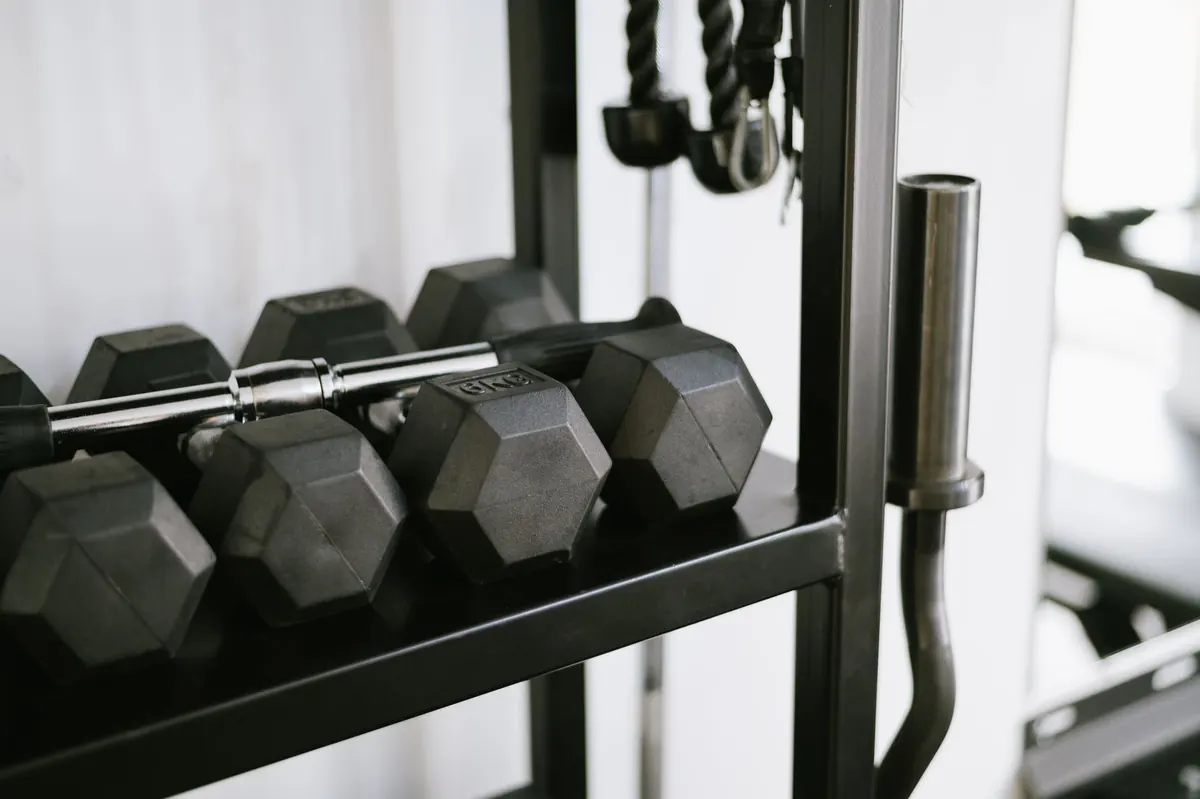
Picture two home gyms in identical spare bedrooms. In the first, a pair of adjustable dumbbells sits on a low stand in the corner and the floor is otherwise clear. In the second, a two-tier rack holds ten pairs of fixed dumbbells, and reaching the window means sideways shuffling. Both owners can run a complete dumbbell workout. Only one of them can also unroll a mat without moving furniture.
That trade-off — floor space against convenience, one purchase against many — is the whole adjustable-versus-fixed debate in miniature. What follows is a practical comparison for people who already know they want to train at home and just need to decide where the money goes.
Adjustable Dumbbells Come in Two Flavors
Before comparing anything, it helps to know which kind of adjustable you're imagining, because they behave very differently.
Dial and selector models live in a cradle or tray. You turn a dial, slide a pin, or press a handle to change the weight. Swapping from 20 to 35 pounds takes two seconds, which makes supersets and drop sets realistic. The trade-off is a mechanism inside the handle that does not appreciate being dropped, and a bulky handle that can feel awkward on close-grip work.
Plate-loaded models use spinlock collars or slide-on plates that you thread on by hand. They're slower to change, they're longer under the hand, and the collars eventually need replacing. In exchange, they're mechanically simple, usually cheaper per pound, and happy to be set down on a rubber mat like a normal dumbbell.
Space: Where the Comparison Is Decided
A pair of adjustables covering roughly 5 to 50 pounds per hand occupies about the footprint of a single pair of fixed dumbbells, plus a stand. To cover the same range with fixed weights you need ten pairs, which means a rack two tiers deep and three or four feet wide. In a garage, that's nothing. In a 10-by-10 spare room that also holds a bench and a bike, it's the difference between a usable gym and a storage unit with a barbell in it.
Don't just measure the rack. Measure the walking lane around your bench, the space you need for overhead pressing, and where you'll actually stand between sets. Most people underestimate the last one, then spend a year stepping over dumbbells to reach the light switch.
Cost: One Purchase or Ten
Compare by coverage, not by unit. A single adjustable pair that spans 5 to 50 pounds replaces a lot of iron, and the up-front cost is usually lower than buying that range as fixed pairs new. Fixed weights, though, have a trick up their sleeve: you can buy them one pair at a time, secondhand, from people who bought too much during a January surge and quit by March. A used pair of 25s or 40s in decent condition is one of the better values in home fitness.
Two more costs to weigh: replacement. If a selector mechanism fails out of warranty, you may be buying a whole new dumbbell. If a fixed dumbbell chips, you keep using it. And if you plan to progress past what your adjustables go up to, you'll eventually buy something else regardless of which route you took. If a purchase this size affects your monthly budget, treat it like any other major household expense and make the call on your own numbers.
Versatility: Speed, Size, and Training Style
Adjustables win on range. One pair can take you from warm-up lateral raises to heavy rows without a rack of anything. They also pack into a car for travel or a move, which fixed iron does not.
Fixed weights win on the details that show up mid-workout:
- Instant changes. No dial, no collar, no counting plates. If you're training with short rest periods, this matters more than you'd expect.
- Compact dimensions. Fixed dumbbells are shorter and narrower, which makes movements like kickbacks, close-grip presses, and single-arm rows feel cleaner.
- Heavy work. Once you're rowing or pressing serious weight, long handles and thick heads get in the way. Serious lifters eventually want fixed or a dedicated heavy pair.
- Consistency. Every dumbbell in a fixed set has the same handle diameter and knurling. Adjustables can vary between sizes.
A common middle path: adjustables as the workhorse for the bulk of your training, plus one fixed pair — say, a weight you use constantly for rows or presses — so you skip the fiddling on your most frequent lift.
Durability and Feel
Fixed dumbbells are about as close to buy-it-once as fitness equipment gets. Cast iron with a rubber or urethane coating handles years of use; the coating may scuff, and knurling wears smooth with heavy use, but nothing breaks in a way that stops the workout.
Adjustables have moving parts, so treat them accordingly. Set them down rather than dropping them, keep the trays clean so the mechanism seats properly, and check that plates are fully locked before every set. A five-second habit check prevents the loudest sound your home gym will ever make.
Feel is subjective but real. If you've trained in a commercial gym, fixed dumbbells will feel familiar immediately. Adjustables take a session or two to trust, especially on presses where you're balancing a wider load.
Which One Fits Your Room and Routine
Choose adjustable dumbbells if:
- Your training space is small or shared with anything else.
- You follow varied programming and change weights often across many exercises.
- You want one purchase that covers a wide strength range.
- You move house, apartment, or garage every few years.
Choose fixed weights if:
- You have a dedicated room with wall space for a rack.
- You train the same handful of lifts and rarely change loads mid-set.
- You're strong enough that compact handles matter.
- You're happy to build the set slowly, buying pairs as you outgrow them.
A Practical Buying Plan
- Write down the heaviest weight you'll need for each main lift, then add a little headroom. That number decides the size of the set you need.
- Measure your floor and mark it with tape. Set a bench down inside the marked area and see what's left.
- Handle the dumbbells before buying if you can — in a store or from a seller. Grip diameter and balance vary a lot between models.
- Check the return policy and warranty on any adjustable set. Buy from somewhere that will take it back if the mechanism is rough out of the box.
- Buy the minimum you need now. Add a second pair or heavier plates later, once you know your routine well enough to predict what you'll use weekly.
One last note: if you're returning to lifting after an injury or a long layoff, add weight gradually and get clearance from a doctor or physiotherapist before loading up at home. The equipment choice matters far less than staying consistent without getting hurt.
Photo: Anete Lusina / Pexels